Veteran Friendly · Financing Available · Licensed and Bonded Call (240) 213-1461
Homes Businesses Pricing FAQ Call (240) 213-1461

Washington, DC Epoxy Floors With a District Grade Finish

District Epoxy Flooring turns tired concrete into hard wearing, easy cleaning surfaces for garages, basements, storefronts, and kitchens all over Washington, DC and the surrounding DMV.

  • Licensed and bonded local crew carrying 30 years of combined experience
  • Veteran friendly team, financing available, every quote itemized in writing
  • Ground, repaired, and moisture checked concrete before any coating is poured
Free Quote

Request a Free Quote

Rather talk it through? Call (240) 213-1461.

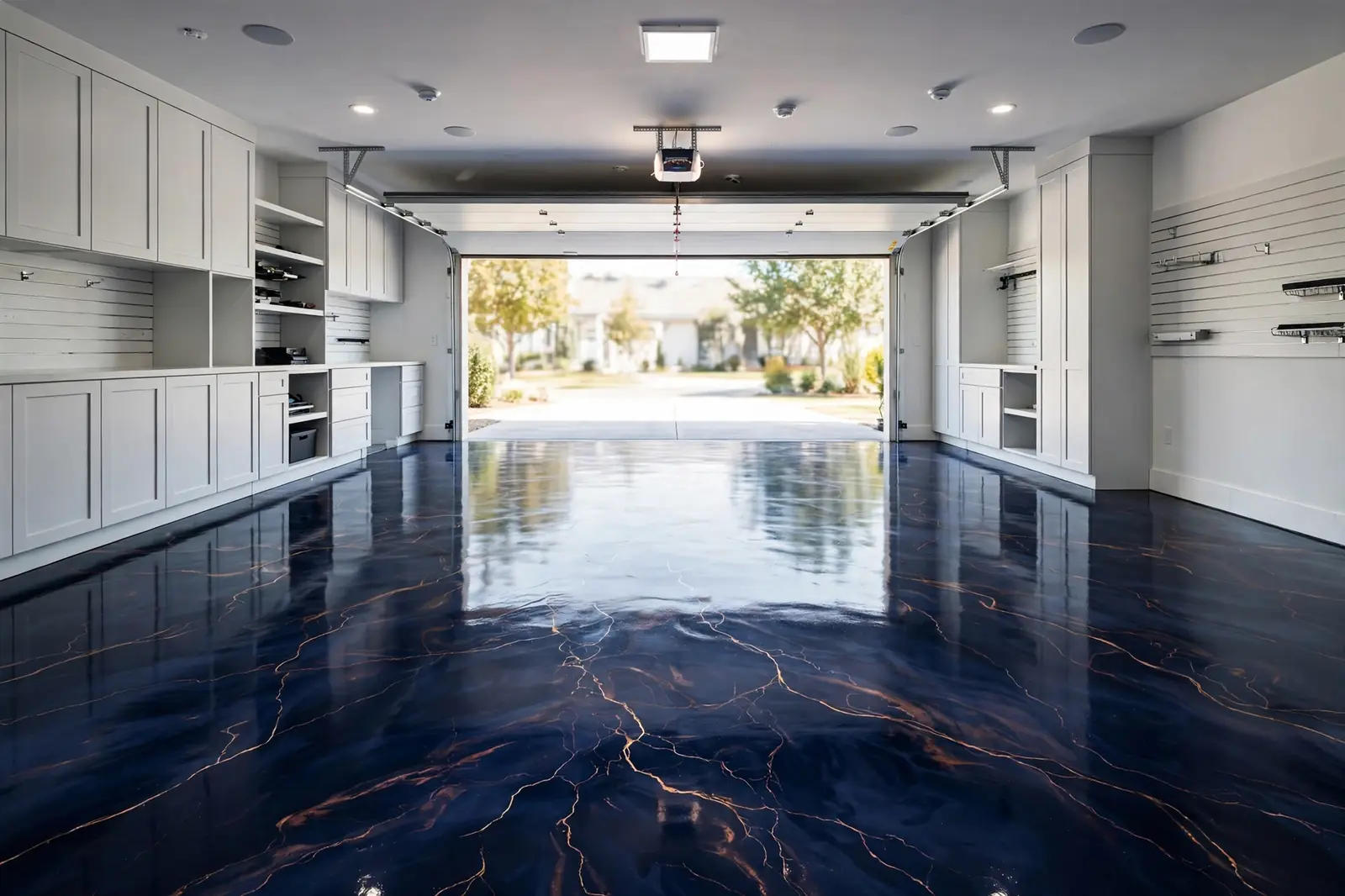
Midnight navy metallic epoxy garage floor in Washington, DC
30+Years Combined Experience
LicensedAnd Bonded Crew
VeteranFriendly Team
FinancingAvailable Options

Epoxy Coating Specialists Rooted in Washington, DC

District Epoxy Flooring exists for one job: coating concrete the right way in the District of Columbia. We serve homeowners, landlords, and business operators across DC and the close in suburbs of Maryland and Northern Virginia. The crew is licensed and bonded, the team is veteran friendly, financing is available on qualifying work, and 30 years of combined experience stands behind every pour.

Concrete in this city lives a rough life. Winter salt rides in on tires and eats garage slabs. Summer humidity pushes up through basement floors poured generations ago. Back of house floors in restaurants and shops absorb grease, heat, and constant traffic. Picking a coating without accounting for any of that is how floors fail early, so we start every job by looking at the slab itself and how the room gets used day to day.

From there you get a written, itemized estimate covering the system, the square footage, the prep work, and the schedule. No vague allowances, no pressure at the door, and no bargain kits that peel inside two seasons.

For DC Homeowners

Residential Epoxy Floors Across the District

Rowhouses in Capitol Hill, colonials in AU Park, condos downtown, and ramblers out in Deanwood all share one thing: concrete that could be doing more. We coat garages, basements, laundry rooms, and living spaces with systems chosen for the room, not pulled off a shelf. Below are the residential services DC homeowners call us about most often.

Charcoal and copper flake epoxy garage floor

Garage Epoxy Coatings

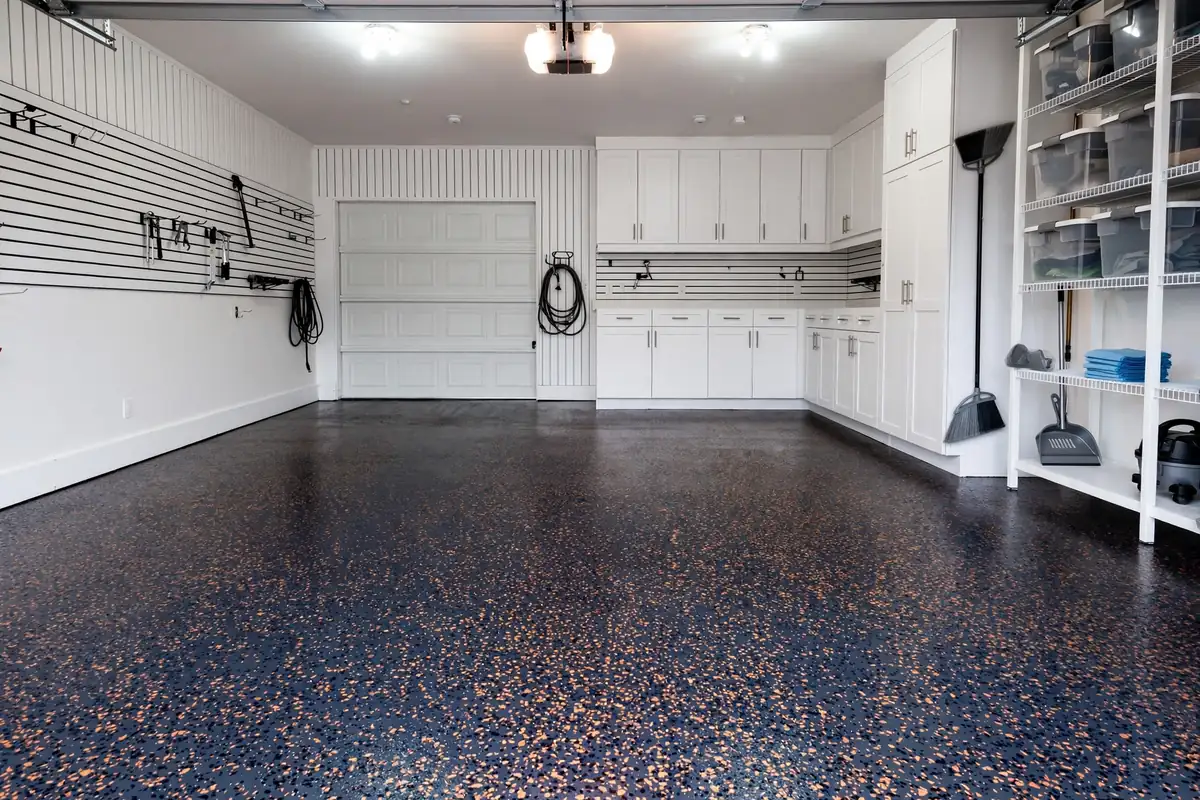
Your garage floor catches everything the street throws at it: melting snow, deicer, motor oil, and hot rubber. We grind the surface open, fill the cracks and pits, then lay a primer built for moisture, a colored base with flake broadcast, and a topcoat that shrugs off chemicals and tire marks. Sweeping takes minutes and spills wipe up instead of soaking in.

Basement Epoxy Floors

Older DC basements often sit on slabs with no vapor barrier underneath, so moisture readings decide the system before anything else. When levels run high, a mitigation primer goes down first. The result is one continuous surface that suits a gym, a home office, a kids play area, or a guest suite, and unlike carpet it will not hide damp or grow musty after a plumbing leak.

Decorative Flake Systems

Vinyl color chips scattered through a wet base coat and locked under clear resin give flake floors their speckled, stone like look. It is the most popular residential choice in the District because the pattern camouflages dust between cleanings, the chips add texture underfoot, and a full broadcast adds genuine thickness. Blends range from soft stone grays to warmer mixes that pair well with DC brick.

Metallic Epoxy Floors

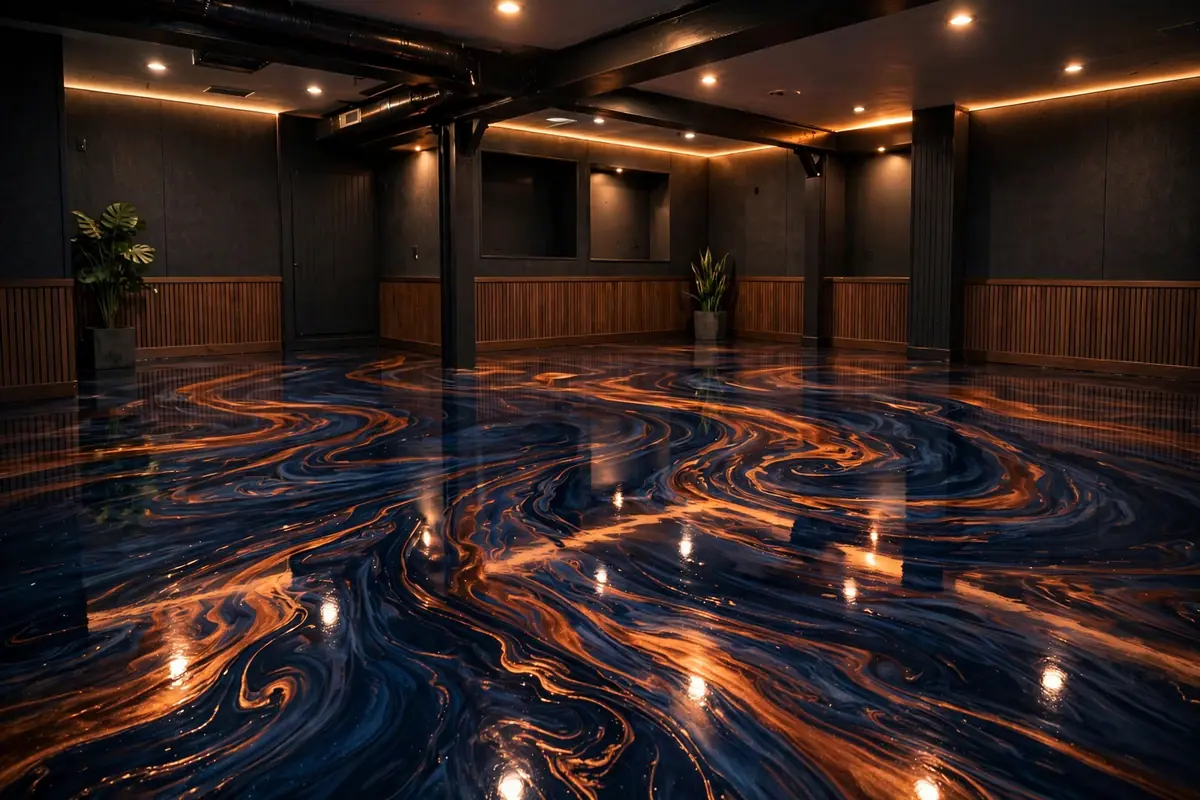
Metallic pigments drift and pool as they cure, so the finished floor carries depth and movement similar to polished marble or slow moving water. Every metallic floor comes out one of a kind. Homeowners pick it for finished basements, bars, and garages that double as showpieces. We walk through sample boards together before install day so the tone and flow match what you pictured.

Quartz Broadcast Floors

Colored quartz granules broadcast into resin build a dense floor with standout grip and compressive strength. Quartz earns its keep in mudrooms, workshops, laundry areas, and anywhere water tracks in. Adding or removing topcoats adjusts how aggressive the texture feels, and the heavy build bridges small slab flaws that thinner systems would telegraph.

Polyaspartic Topcoats

Polyaspartic resin cures in hours rather than days, holds its color under sunlight, and handles temperature swings that stress standard epoxy. Paired as a topcoat over an epoxy base, it gives a garage the bond strength of epoxy with far better UV and chemical resistance. It is the smart pick for aprons and entries that catch direct afternoon sun.

Epoxy Countertops

A poured epoxy counter can carry the veining of marble or granite at a fraction of replacement cost, sealed over your existing counters or a prepared base. Edges and backsplash joints get sealed tight. Day to day care is simple: trivets under hot cookware, boards under knives, soap and water for cleanup. Light scratches can be sanded out and refreshed instead of replacing the whole surface.

Kitchen and Laundry Floors

Rooms that get mopped weekly deserve a floor without grout lines to trap grime. Epoxy runs wall to wall in one sheet, and we can carry it up the base of the wall as a cove so small leaks stay visible instead of creeping under cabinets. Flake and quartz blends hide lint and pet hair between cleanings, and grip texture can be added anywhere footing gets slick.

Porches, Patios, and Pool Decks

Ordinary epoxy chalks and yellows outdoors, so exterior work gets UV stable polyaspartic systems blended to flex through freeze and thaw cycles. Before coating, we patch cracks and confirm the slab sheds water instead of pooling it. Lighter colors around pools stay cooler under bare feet, and the texture keeps wet footing secure.
Navy and copper metallic epoxy basement floor
For DC Businesses

Commercial Epoxy Flooring in Washington, DC

A business floor is equipment, and choosing the wrong resin shows within the first year. We spec each commercial job around what actually happens on that floor, from forklift lanes off New York Avenue to dinner service in Adams Morgan, and we phase the work around your operating hours wherever the schedule allows.

Commercial kitchen with a dark navy epoxy floor

Warehouses and Distribution

Forklift traffic grinds unprotected concrete into dust at every turn. High build epoxy at serious mil thickness, filled joints, and painted aisle lines, walkways, and hazard zones give you a floor that takes the abuse and reads clearly for safety. Lighter finishes also bounce more of your lighting back into the workspace.

Restaurants and Kitchens

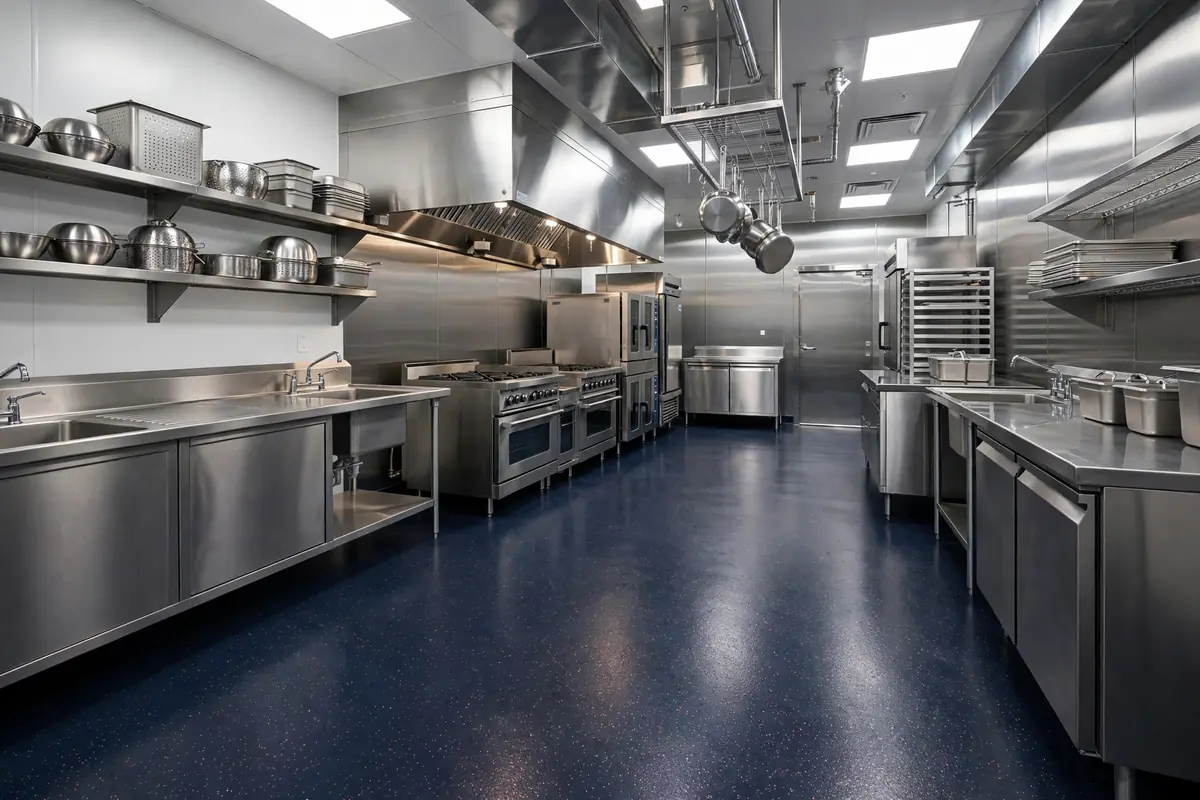
Grease, boiling water, steam, and inspectors all test a kitchen floor. Urethane cement is often the right call here because it tolerates thermal shock that cracks plain epoxy. We build it seamless with an integral cove base and slip resistant aggregate, sloped toward drains where the layout permits, and we work closed hours so service never stops.

Auto Shops and Service Bays

Oil, coolant, brake fluid, and fuel all stain bare concrete permanently. A chemical resistant epoxy sealed with a polyurethane or polyaspartic topcoat keeps spills on the surface where they mop up fast, while standing up to hot tires, dropped tools, and lift traffic. A bright finish helps techs spot dropped hardware and fresh leaks.

Retail and Showrooms

Retail floors sell while they endure. Metallic systems give a marbled, high end read, flake hides day to day wear, and solid colors can be matched to a brand palette. UV stable topcoats guard against fading near storefront glass, and phased installation lets part of the store keep trading while we coat the rest.

Medical, Lab, and Office

Clinics and labs around the Northwest hospital corridors need surfaces that survive aggressive disinfection. Seamless epoxy leaves no seams or grout lines for moisture to harbor, rolls quietly under carts and wheelchairs, and accepts antimicrobial additives and cove bases. After hours scheduling keeps patients and staff out of the work zone.

Parking Garages and Multifamily

Deck traffic drags salt and water onto concrete that protects steel below, so traffic rated systems waterproof the slab while resisting both. We also handle the rooms buildings overlook: trash rooms, mechanical spaces, bike storage, loading areas, and service halls, phased level by level with your property manager so tenants keep coming and going.

Prep Is the Product

Concrete Preparation and Specialty Work

A coating can only grip what it touches, which is why preparation decides whether a floor lasts two years or twenty. These services happen on every District Epoxy Flooring project before the first gallon opens.

1

Diamond Grinding and Profiling

Every slab gets diamond ground to open the pores and cut the surface profile resin needs to bond. Our grinders run on HEPA vacuum systems that capture dust at the source. Grinding also strips failed sealers, paint, oil soaked spots, and laitance, the weak skin on cured concrete that causes coatings to let go.

2

Crack, Spall, and Joint Repair

Freeze and thaw cycles pry cracks wider each winter, and any flaw left open prints through a new finish. Hairline cracks get filled, wider ones get chased and filled with flexible material, and spalls get rebuilt with polymer mortar and ground flush. On control joints we talk through filling them smooth versus honoring them for movement.

3

Moisture Testing and Mitigation

Vapor pushing up through a slab is the top cause of bubbling and peeling, and plenty of District homes were poured before vapor barriers were standard. We measure emission levels before recommending a system, and when readings demand it, a rated mitigation primer goes down first. One extra step now prevents a failed floor later.

Recent Work

Recent District Epoxy Flooring Projects

Three recent jobs, logged the way they ran. Each began with the same slab evaluation, itemized written estimate, and full prep sequence described on this page.

Georgetown · Garage Flake System

Two Car Garage, Full Flake Broadcast

$6,500

September 2025. A carriage house garage whose slab showed salt pitting and dark oil staining near both bays. Scope ran diamond grinding, crack filling, a moisture tolerant primer, a full flake broadcast, and a polyaspartic topcoat. Winter cleanup is now a hose down, and the salt residue lifts off the sealed surface instead of eating into the concrete.

Capitol Hill · Basement Metallic

Basement Rec Room, Metallic Epoxy

$9,200

April 2026. A below grade family room where moisture readings came back elevated. A mitigation primer went down first, followed by a metallic system in navy and copper tones picked from sample boards at the estimate visit. The room now reads as a finished lounge rather than a painted slab, and the seamless surface shrugs off the occasional damp that used to ruin carpet tiles.

Navy Yard · Commercial Kitchen

Restaurant Kitchen, Urethane Cement

$16,500

July 2026. A busy kitchen needed a floor that could survive nightly hot washdowns and satisfy inspectors. The crew installed urethane cement with an integral cove base and slip resistant aggregate across three overnight shifts, so the restaurant never lost a dinner service. Closing cleanup runs faster on the sealed, sloped surface, and standing water no longer pools by the dish pit.

Why District Epoxy Flooring

What Sets This Crew Apart in Washington, DC

We are a local coating contractor, not a franchise territory and not a general handyman renting a grinder for the weekend. Here is what that difference looks like on your project.

1

How We Run a Job

Evaluate the slab, measure moisture, write the estimate, then grind, repair, coat, and walk the finished floor with you. Prep steps are never skipped to save a day, and no slab gets coated untested. One lead installer owns your project from the first grind pass to the final walkthrough.

2

What Goes on the Floor

Full solids commercial epoxies, polyaspartic and polyurethane topcoats, urethane cement for hot kitchens, and mitigation primers rated to measured moisture levels. Licensed and bonded, with 30 years of combined experience matching systems to the District's salt, humidity, and freeze thaw swings. Nothing watered down, nothing from a big box shelf.

3

Schedule and Expectations

Most garage projects run one to three days, with foot traffic after roughly a day and vehicles back after three to seven days of curing. Commercial work gets phased around your hours. The team is veteran friendly, financing is available on qualifying projects, and your written estimate states the timeline before work begins rather than after.

What It Costs

Epoxy Flooring Prices in Washington, DC

District pricing sits at the upper end nationally because labor, access, and operating costs here run higher. The ranges below reflect real jobs we can deliver at those numbers. The figure that governs your project is the written estimate we produce after standing on your slab.

SystemTypical Range
Solid color epoxy, two coat residential system$9 to $13 per square foot
Decorative flake system for homes$11 to $15 per square foot
Metallic epoxy, designer finish$13 to $18 per square foot
Two car garage, flake system, complete$3,400 to $6,800
Basement epoxy including moisture mitigation$4,800 to $9,500
Commercial systems, heavy duty epoxy or urethane cement$11 to $19 per square foot
Epoxy countertops, priced per linear foot$90 to $175

Where a project lands inside its range depends on crack and spall repair, removal of an old coating, moisture mitigation, broadcast density, topcoat selection, and how equipment reaches the slab. Small rooms cost more per square foot because setup time does not shrink with the room. Bargain kits skip the grinding entirely, which is why they wear through so quickly.

A Typical District Project, Priced Out

Most two car garage jobs in the city finish between $3,400 and $6,800 complete, and a full scope flake job with repairs commonly settles near $6,500. Whole homes and commercial spaces scale from there with square footage and system choice. Your estimate spells out every line before you commit to anything.

Service Area

Serving the District and the Close In Suburbs

District Epoxy Flooring is based in Washington, DC and works in every quadrant: Georgetown, Capitol Hill, Shaw, Columbia Heights, Petworth, Navy Yard, Brookland, Dupont Circle, Adams Morgan, Foggy Bottom, Anacostia, and the Palisades. Across the river we coat homes and businesses in Arlington, Alexandria, Falls Church, McLean, and Tysons, and in Maryland we cover Bethesda, Chevy Chase, Takoma Park, Silver Spring, Rockville, and Potomac. If your address sits in the metro area, ask us. We will tell you honestly whether your project fits our route.

Your Concrete Could Look Like This

Book a free slab evaluation and get an itemized written estimate with the system, the square footage, and the schedule spelled out. One call is all it takes to start.

Call (240) 213-1461
Questions

Frequently Asked Epoxy Questions

Direct answers to what Washington, DC homeowners and property managers ask before they book.

What does epoxy flooring cost in Washington, DC?

Installed epoxy in the District generally falls between $9 and $19 per square foot depending on the system selected, the slab condition, and the preparation involved. A two car garage with a flake system commonly totals $3,400 to $6,800, and a basement needing moisture mitigation usually lands between $4,800 and $9,500. Every project gets an itemized written estimate after we inspect the concrete, so the number you plan around is exact.

How many years will an epoxy floor hold up?

A professionally ground and coated epoxy floor typically serves 10 to 20 years in residential use and 5 to 10 years under heavy commercial traffic before a refresh coat is worth considering. Prep quality and film thickness decide most of that lifespan. Regular sweeping and rinsing away winter salt keep wear patterns even across the surface.

How long does installation take from start to finish?

Most home garage projects wrap up in one to three days. The first day covers grinding, repairs, and the primer or base coat, and the following day brings the broadcast and topcoat. Light foot traffic is fine after roughly a day, and cars can return after three to seven days of cure time. Commercial schedules get phased around your operating hours.

Can you coat concrete that is cracked or worn?

In most cases, yes. The slab gets ground to the correct profile, cracks and spalls get filled and leveled, and moisture gets measured before any system is recommended. High moisture readings simply mean a mitigation primer joins the system. The evaluation visit exists to catch all of this before a price is promised.

Is financing offered on epoxy projects?

Yes, financing is available on qualifying projects. Mention it when you request your quote and we will lay out the payment choices that fit the size of your job.

Which neighborhoods and suburbs do you cover?

District Epoxy Flooring covers all of Washington, DC plus the nearby DMV suburbs. On the Virginia side that means Arlington, Alexandria, Falls Church, and Tysons. On the Maryland side it means Bethesda, Chevy Chase, Silver Spring, and Rockville. The evaluation and written estimate are both free, with the system, square footage, and schedule itemized before you decide anything.

Free Quote

Request Your Free Epoxy Estimate

Share a few details about the space and we will set up your free slab evaluation. A member of the crew answers, never a call center.

Your details go straight to the crew. Prefer speaking with someone? Call (240) 213-1461.